
Anonymous Transactions Are Not a Button: What a Privacy Wallet Actually Protects
Can a wallet make a transaction anonymous simply by hiding your name? That question exposes the central misunderstanding in cryptocurrency privacy. Most networks do not record names directly, but they do record transaction histories, addresses, amounts, timing, and relationships between inputs and outputs. If those clues can be connected to a person through an exchange, a merchant, a reused address, or a compromised device, apparent anonymity can weaken quickly.
For US users comparing a privacy wallet, a Bitcoin wallet, or a multi-currency application, the important issue is therefore not whether the interface promises “anonymous transactions.” It is how privacy is produced, what information remains visible, and where the protection ends. Monero and Bitcoin illustrate the distinction especially well: they use fundamentally different transaction models, so a wallet cannot give them identical privacy characteristics merely by offering both in one application.
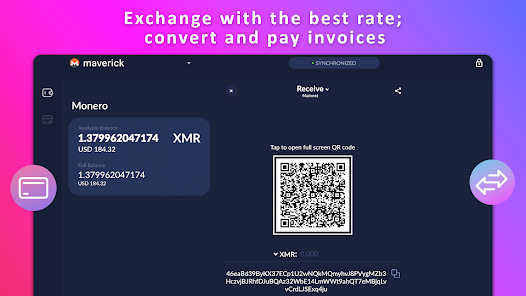
Anonymous, pseudonymous, and confidential are different properties
Bitcoin is often described as anonymous because users can transact without placing their legal names on the blockchain. A more accurate description is pseudonymous. The ledger usually shows public addresses rather than names, but those addresses and their transaction histories are visible. Blockchain analysis can cluster addresses, follow flows, identify recurring behavior, and connect activity to information obtained outside the network.
This does not mean every Bitcoin user is automatically identified. It means identity protection depends on context and behavior. Address reuse, transparent exchange withdrawals, public donation addresses, predictable payment patterns, and careless separation between personal and business activity can all create links. Privacy is not a single setting; it is a property that emerges from several layers, including the protocol, wallet design, network connection, device security, and the user’s operational habits.
Monero approaches the problem at the protocol level. Its design uses mechanisms intended to obscure the sender, recipient, and transaction amount from ordinary public observation. In practical terms, this makes the public ledger less useful for reconstructing a complete payment graph. That is a stronger form of default financial privacy than transparent-chain systems generally provide.
Yet “private by default” does not mean “invisible under every circumstance.” A recipient may know who paid them. A regulated exchange may retain identity and withdrawal records. A phone may contain screenshots, notifications, backups, or malware. Network observers may learn metadata even when the chain conceals transaction details. The sharper mental model is this: cryptographic privacy protects particular data relationships, while anonymity depends on the entire surrounding system.
How the mechanism changes the wallet experience
A wallet is not merely a digital container for coins. It creates transactions, manages keys, selects inputs, communicates with network infrastructure, displays balances, and sometimes connects to exchanges or payment services. Each function has privacy consequences. A well-designed privacy wallet attempts to reduce unnecessary disclosure, but it must still balance speed, usability, synchronization, fees, and compatibility.
On Bitcoin, transaction construction can expose information through input selection and address management. If several previously separate balances are spent together, an observer may reasonably infer that those coins were controlled by one entity. Change outputs can also reveal which output likely returned to the sender. Privacy-enhancing techniques exist, but they require careful implementation and often require users to understand timing, counterparties, fee behavior, and wallet settings.
Monero changes the baseline because the protocol itself is designed to make ordinary chain analysis more difficult. The wallet still matters: it must protect private keys, synchronize accurately, communicate with nodes, and avoid leaking sensitive metadata. But the user is not asked to recreate the same privacy conditions manually for every standard payment. This is one reason privacy-focused users may prefer a wallet that treats Monero as a first-class asset rather than as a minor feature beside transparent-chain balances.
A multi-currency wallet introduces a useful convenience and a real trade-off. One application can simplify backup routines, portfolio management, and everyday payments across assets. It can also concentrate risk. If the device, seed phrase, password, or application environment is compromised, several currencies may be exposed at once. Furthermore, an interface that makes different assets look similar can hide important differences in confirmation rules, address formats, fee markets, privacy assumptions, and recovery procedures.
For readers evaluating a cake wallet setup, the practical question should not be whether a single app sounds private. Ask which assets are supported in the current version, how keys are stored, whether the wallet lets users control or choose network connections, what information its services receive, and how recovery works. Features and integrations can change, so current documentation and the application’s own permissions deserve more weight than a generic marketing label.
What a Bitcoin wallet can and cannot do
A Bitcoin wallet can improve privacy through disciplined address management, avoiding unnecessary address reuse, limiting data shared with third-party servers, and giving users more control over transaction construction. It can also make privacy practices easier to follow by clearly separating receiving addresses, explaining change, and warning when a transaction combines coins that carry different histories.
But a wallet cannot erase information that has already entered the public ledger. Nor can it guarantee that a transaction remains disconnected from an identity if the user buys coins through an identified account and immediately sends them to a known personal destination. Privacy tools reduce the strength of certain inferences; they do not repeal the relationship between public records and real-world behavior.
This boundary matters in the United States, where users may interact with exchanges, payment processors, banks, merchants, and tax-reporting systems that maintain their own records. A private on-chain transaction can still sit inside a broader compliance and identity trail. Privacy and lawful reporting are not opposites: users need to understand what records they control, what records service providers retain, and which obligations apply to their situation.
There is also a security boundary. A wallet that improves blockchain privacy but stores a seed phrase in a cloud note has solved the wrong problem. Likewise, routing traffic through a privacy-oriented connection does not protect funds if a fake application captures the recovery phrase. The order of priorities should be clear: authentic software, secure key storage, verified backups, device hygiene, and then more advanced privacy considerations.
A reusable framework for choosing a privacy wallet
A useful evaluation separates five questions. First, what does the protocol reveal by design? Second, what does the wallet reveal through its servers, node connections, or analytics? Third, what does the device reveal through notifications, logs, and backups? Fourth, what does the user reveal through exchanges and counterparties? Finally, what happens if the wallet is lost, corrupted, or no longer available?
This framework prevents a common category error: judging privacy from the front-end interface alone. A clean balance screen says little about whether the wallet uses remote infrastructure, whether address queries can be associated with an IP address, or whether transaction metadata is retained. Conversely, technical complexity is not automatically evidence of better protection. A feature that users cannot understand or configure safely may create more operational mistakes than benefit.
For everyday use, a reasonable decision may involve separating functions. A user could keep routine spending funds in a mobile wallet while placing larger holdings in a more isolated arrangement. They might also avoid treating a privacy asset and Bitcoin as interchangeable: the former may offer stronger ledger privacy by default, while the latter may offer broader acceptance and a different ecosystem of tools. The right choice depends on the threat model—who the user is trying to hide from, what information must remain private, and how much complexity they can manage reliably.
What to watch next
The most meaningful development to watch is not a new slogan about anonymity but a gradual shift toward privacy-aware usability. Wallets that explain network exposure, distinguish asset-specific risks, make backup verification understandable, and let users choose infrastructure may improve real-world privacy more than tools that add advanced features without clear guidance.
That progress remains conditional. More privacy can create regulatory friction, reduce interoperability with some services, or make transaction recovery and customer support more difficult. More control can also mean more responsibility. If future wallets make these trade-offs visible instead of hiding them, users will be better positioned to choose deliberately rather than confuse convenience with confidentiality.
The durable lesson is simple but demanding: anonymous transactions are not a property granted by an app name. They result from the interaction of protocol design, wallet behavior, network architecture, identity exposure, and personal security. Monero can provide a stronger privacy baseline than transparent Bitcoin transactions, while Bitcoin wallets can still support sensible privacy practices within their limits. The informed user does not ask only, “Is this wallet anonymous?” They ask, “Which observer is blocked, which observer is not, and what must I do to preserve the protection?”
Frequently asked questions
Are Bitcoin transactions anonymous?
Usually, Bitcoin transactions are better described as pseudonymous. The blockchain records addresses and transaction details publicly, not legal names, but outside information and transaction patterns can sometimes connect those addresses to people or organizations. A Bitcoin wallet can reduce unnecessary exposure, but it cannot guarantee anonymity.
Is Monero completely untraceable?
No cryptocurrency should be treated as completely untraceable in every setting. Monero is designed to conceal important transaction details from ordinary public blockchain observation, but identity records held by exchanges, information known by recipients, device compromise, network metadata, and user mistakes remain relevant. Its stronger protocol-level privacy is meaningful, not magical.
What is the most important wallet privacy practice?
Protect the recovery phrase and verify the software before focusing on advanced privacy features. A lost or stolen key defeats every other protection. After that foundation, examine address reuse, server dependence, network connections, application permissions, and the identity information created when funds enter or leave the wallet.


Deja una respuesta