
Multi-Chain Wallet DeFi Security: How to Use Rabby More Safely
A common misconception is that a multi-chain wallet makes DeFi safer simply by putting many networks in one interface. It does not. A wallet can reduce confusion, expose important transaction details, and help users notice suspicious approvals, but it cannot remove the underlying risks of smart contracts, compromised websites, malicious tokens, or careless signing. The more accurate view is that a wallet is a security control surface: it helps a person interpret and authorize blockchain actions. That distinction matters for US DeFi users, because a familiar browser workflow can make a transaction feel routine even when it grants a contract significant control over assets.
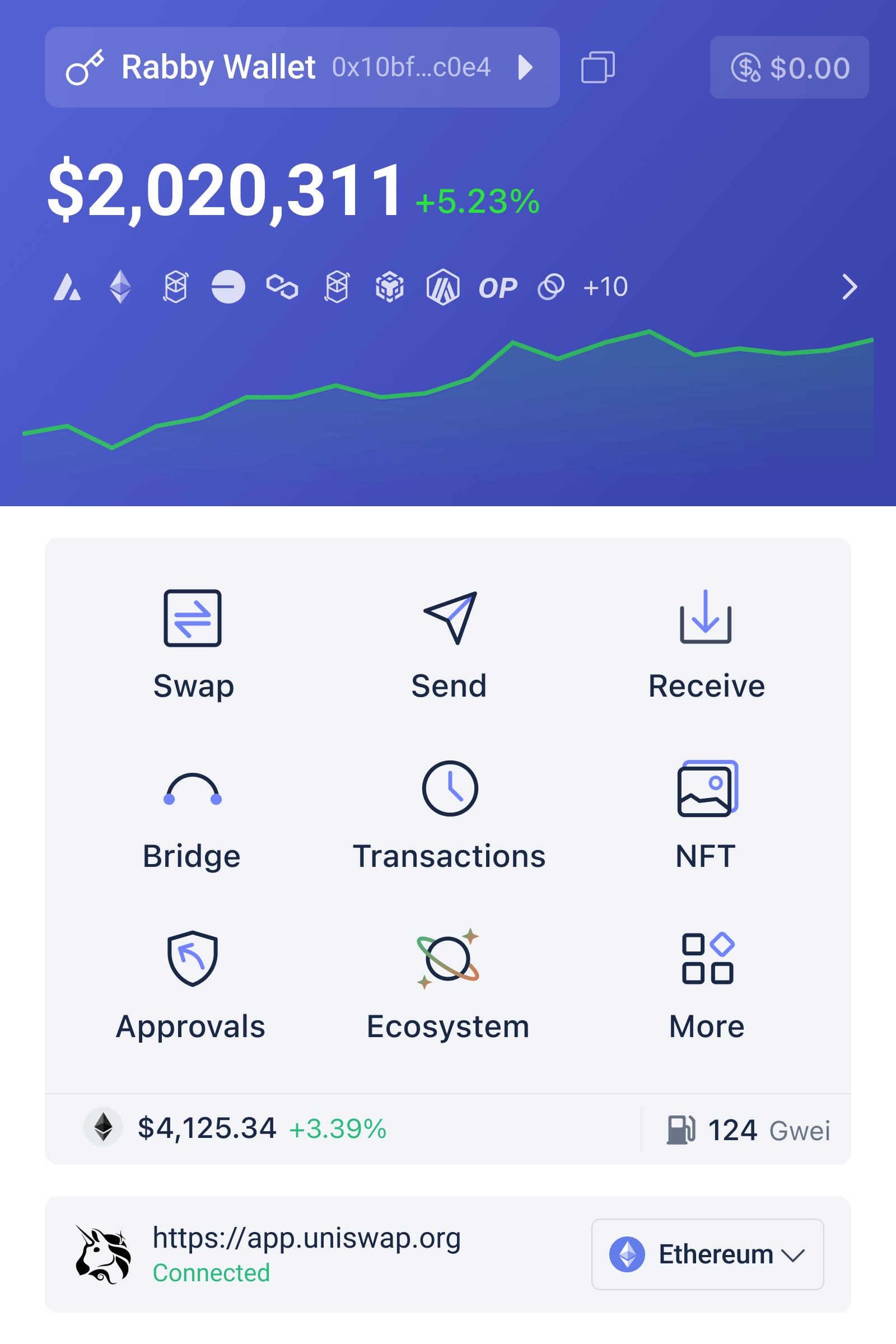
Rabby is best understood in that context. A browser wallet is not a vault that independently judges every transaction; it is software that connects a user, a private key, one or more blockchains, and decentralized applications. Its value depends on how clearly it represents what an application is requesting and how carefully the user checks the result. The practical objective is not to find a wallet that makes mistakes impossible. It is to build a process in which the most expensive mistakes become harder to make.
Why Multi-Chain Wallets Changed DeFi Security
Early cryptocurrency wallets were often designed around a single network or a narrow set of applications. As DeFi expanded across Ethereum-compatible networks and other ecosystems, users began moving between lending markets, decentralized exchanges, liquid staking services, bridges, and layer-two networks. The security problem changed with that expansion. It was no longer enough to protect a seed phrase. Users also had to know which chain they were using, which contract they were calling, what token they were approving, and whether an application was operating on the intended network.
A multi-chain wallet addresses part of this coordination problem by presenting multiple networks and accounts through one interface. That is convenient, but convenience creates a subtle risk: it can compress distinct security contexts into one visual environment. A user may recognize the same account address across several Ethereum-compatible networks and assume that the same application, token, or contract has the same status everywhere. It may not. Code deployed on one chain can differ from code with a similar name on another, and a token symbol is not a reliable identity.
This is the first important mental model: a wallet does not merely hold assets; it mediates permissions. When a user signs a message or transaction, the wallet is helping authorize a state change on a blockchain. A transaction may transfer tokens, trade assets, deposit collateral, borrow funds, or interact with a contract that can spend assets previously approved. The visible dollar amount is only one part of the risk. The permission being granted may matter more than the immediate transfer.
What a Secure DeFi Workflow Should Examine
Before installing any browser extension, start with the source. Search results, social-media posts, sponsored advertisements, and copied documentation can lead to impersonation pages. Use a trusted official project channel or a source you have independently verified, and inspect the browser’s extension publisher and permissions during installation. The provided rabby extension download resource can serve as an orientation point, but users should still verify that the installation flow matches the expected wallet and browser behavior.
After installation, the seed phrase deserves more protection than any interface feature. It should not be entered into a website, support chat, form, or pop-up claiming to repair an account. A browser wallet is generally a hot-wallet arrangement: the signing key is available to software connected to an internet-enabled device. That makes it practical for everyday DeFi activity, but it also means device security, browser hygiene, and phishing resistance remain part of the wallet’s security model. For larger balances, separating long-term holdings into a hardware wallet or another more isolated arrangement can reduce exposure, although it adds operational complexity.
When connecting to a decentralized application, check the domain, selected account, selected network, and requested permissions before proceeding. If a site unexpectedly asks for a signature before showing its normal interface, pause. A message signature may not move funds immediately, but it can still authorize an off-chain action or support a phishing process. Transaction signatures are different from ordinary messages, yet both should be treated as meaningful authorizations rather than harmless clicks.
Transaction simulation and risk warnings can improve the review process when they are available and accurate. A simulation attempts to show the expected outcome of an interaction before it is submitted. This can help reveal that a swap would receive an unexpected token, that an approval is larger than intended, or that an interaction would fail. Warnings can also draw attention to suspicious contracts or unusual asset behavior. These tools are useful because smart-contract calls are difficult for non-specialists to interpret directly.
They are not proof of safety. A simulation may depend on current blockchain state, supported networks, available decoding information, and the assumptions of the wallet’s analysis systems. A new exploit, a manipulated front end, an oracle problem, or a contract behavior that is difficult to model may not be identified. Treat warnings as evidence to evaluate, not as a guarantee. The absence of a warning means “nothing detected under the available checks,” not “this transaction is risk-free.”
Approvals, Bridges, and the Limits of Visual Confidence
Token approvals are one of the most misunderstood parts of DeFi security. When a user approves a contract to spend a token, the permission can remain active after the original trade or deposit is complete. If the approved contract is later compromised or the user interacted with a malicious contract, that standing permission may become a pathway to loss. The transaction that creates the approval may involve no obvious transfer, which is precisely why a user focused only on the immediate balance change can miss its significance.
A safer practice is to distinguish between a one-time authorization and a broad, continuing allowance. Where an application supports it, a limited approval can reduce the amount exposed if something goes wrong. Users should also periodically review and revoke permissions they no longer need, while recognizing that revocation itself requires a blockchain transaction and therefore a network fee. Revoking every approval indiscriminately is not automatically the best strategy; the decision should reflect asset value, contract trust, usage frequency, and the cost of maintaining the permission.
Bridges create another boundary condition. A multi-chain wallet can make it easy to switch networks, but it does not make a bridge trustworthy. Bridges may rely on validator sets, multisignature arrangements, proof systems, liquidity pools, or other mechanisms. Their failure modes differ, and the token received on the destination chain may represent a claim rather than the native asset users expected. A wallet can help display the network and transaction, but it cannot compensate for weak bridge design or an inaccurate assumption about what is being transferred.
There is also a human-factors trade-off. A unified wallet reduces the need to manage several applications and network-specific accounts, which may lower routine confusion. At the same time, a polished interface can encourage automatic approval behavior. Security improves when users preserve a deliberate pause at high-risk moments: changing networks, signing unfamiliar messages, granting approvals, interacting with a newly discovered protocol, or moving a substantial amount of value.
A Practical Decision Framework for Rabby Users
For everyday DeFi activity, a simple four-part review is more reusable than memorizing a list of scams. First, identify the asset and network: what token is involved, on which chain, and in which account? Second, identify the action: is this a transfer, swap, deposit, withdrawal, approval, permit, or message signature? Third, identify the counterparty: does the contract and application match the intended protocol, and is the domain correct? Fourth, identify the consequence: what permission or economic exposure remains after the transaction succeeds?
This framework is especially helpful when the interface looks familiar. Familiarity is not authentication. A malicious site can copy branding, imitate a legitimate application, and request a transaction that appears ordinary at a glance. Conversely, a legitimate protocol can produce a complex transaction whose meaning is not obvious. In both cases, the user should examine the requested action rather than rely on visual confidence.
Users can also divide their activity by risk. A spending or experimentation wallet may interact with new applications and hold only the amount needed for those activities. A separate wallet can hold longer-term assets and connect rarely, while a hardware wallet can add a physical confirmation step for higher-value transactions. This separation does not eliminate risk: users can still send funds to the wrong address or approve a malicious contract. It does, however, limit the blast radius of a single compromised website or mistaken signature.
Backups require similar discipline. Keep recovery material offline, avoid digital photographs or cloud notes, and test the recovery process only in a controlled way. A wallet that is secure against online attackers can still fail through loss, fire, device destruction, or an unreadable backup. For households and businesses, recovery planning is therefore both a cybersecurity question and an operational-continuity question.
What Matters in the Current State of Multi-Chain Wallets
The category has moved from simple key storage toward transaction interpretation. That is a meaningful shift. As protocols become more composable, a single transaction can trigger several contract calls, route through multiple pools, or alter collateral and allowance states. Users need more than an address balance; they need a readable explanation of intended effects and residual permissions. Wallets that improve this visibility may reduce avoidable errors, particularly for users moving across several networks.
Yet interpretation remains an active technical and human challenge. Software can decode known contract functions, compare expected outcomes, and flag patterns associated with risk. It cannot perfectly infer the intent of every contract or predict every future failure. The most credible near-term scenario is therefore incremental improvement: better simulation, clearer permission displays, stronger phishing detection, and more consistent support across networks. The relevant signal for users is not a promise of perfect protection, but whether a wallet makes high-consequence actions more legible without encouraging blind trust.
For US users, this distinction also has a practical compliance and record-keeping dimension. Multi-chain activity can complicate personal accounting because swaps, liquidity positions, rewards, bridges, and transfers may occur on different networks and at different times. A wallet interface is not a complete tax record or an independent source of legal advice. Keeping transaction records and understanding the character of each activity remains the user’s responsibility, especially when assets move between personal wallets and platforms.
Frequently Asked Questions
Does Rabby make DeFi transactions safe?
No wallet can guarantee safety. Rabby may make transaction details, network context, and certain risks easier to inspect, but users still face malicious contracts, phishing sites, compromised devices, bridge failures, and irreversible blockchain transactions. Its security value is strongest when its information is treated as a review aid rather than an automatic approval system.
Should I use one wallet for every DeFi activity?
Using one wallet is convenient, but separating funds by purpose can reduce losses if an account interacts with a malicious application. Consider a smaller operational wallet for experimental or frequent activity and a more isolated arrangement for long-term holdings. The right structure depends on value, frequency, technical ability, and how much operational complexity you can manage reliably.
Are token approvals more dangerous than ordinary swaps?
They can be, because an approval may create continuing permission for a contract to spend a token. A swap can also be dangerous if the destination, token, slippage, or contract is wrong, but an approval may remain relevant after the visible transaction is complete. Review the allowance, limit broad permissions when practical, and revoke unused approvals while accounting for the network fee.
What is the most useful habit when using a multi-chain wallet?
Pause before signing and name the action in plain language: which network, which asset, which contract, which permission, and what remains possible afterward. This habit counters the false assumption that a familiar interface represents a familiar level of risk. In DeFi, deliberate interpretation is often more valuable than speed.
A multi-chain wallet is not a substitute for judgment; it is a way to make judgment more informed. The central security question is not whether the screen looks clean, but what authority the signature grants and how much value depends on that authority. Once users adopt that mental model, features such as simulation, warnings, network labels, and approval management become tools within a process rather than reasons to stop thinking. That is the durable lesson of DeFi wallet security: reduce ambiguity, limit permissions, separate risk, and treat every signature as an action with consequences.


Deja una respuesta